Multi-day weddings: Why more time leads to greater depth
A wedding that breathes. More and more couples are consciously choosing to avoid the time pressure of a single day and opting instead for a shared experience that unfolds over an entire weekend. Not more noise—but more tranquility.
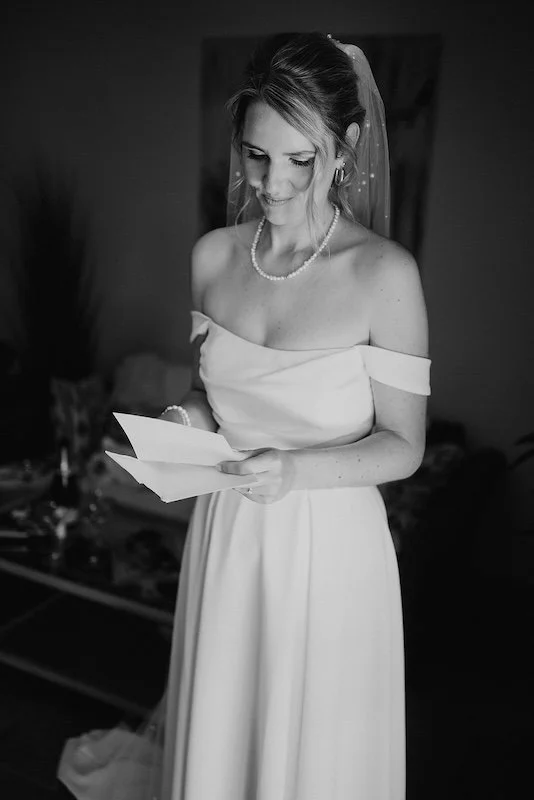
When the moment sets the pace—not the schedule
Destination weddings in Italy and Spain, in particular, but also weddings in the Rhine-Main region, show that a multi-day celebration changes everything. When time is allowed to slow down, it creates space for what really matters—far removed from tight schedules and rigid traditions. It allows time to settle in, for genuine conversations, and for moments that would otherwise be lost in the hustle and bustle.
In this article, you’ll learn:
Why a wedding weekend feels different emotionally.
For which couples this concept is particularly well-suited.
What a typical process might look like.
Benefits that many people only truly appreciate in hindsight.
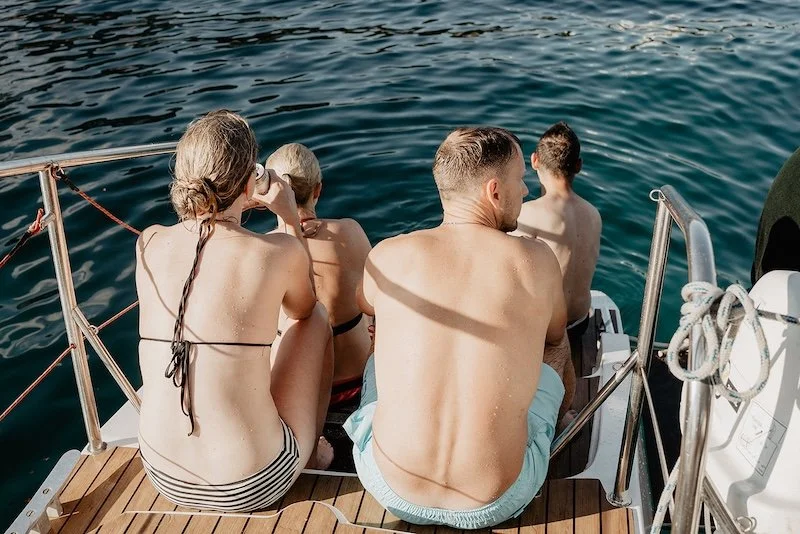
A relaxing start: a pre-wedding boat tour before the big day.
1. Be present, not rushed.
At classic daytime weddings, everything happens within a few hours: getting ready, the ceremony, reception, dinner, and the party – often on a very tight schedule.
Multi-day weddings start earlier.
Often with a welcome dinner, a group evening, or a relaxed get-together the night before.
The effect:
Guests really do arrive
Conversations take place without time pressure
The wedding feels less like an event and more like a shared experience
2. Less time pressure on the wedding day
If everything doesn't have to happen in one day, the entire process changes.
The wedding day itself will be quieter:
no frantic switching between program items
more time between moments
more room for spontaneity
Many couples say that they feel more present on their wedding day during a multi-day celebration because they know that nothing will be missed. There’s plenty of time.
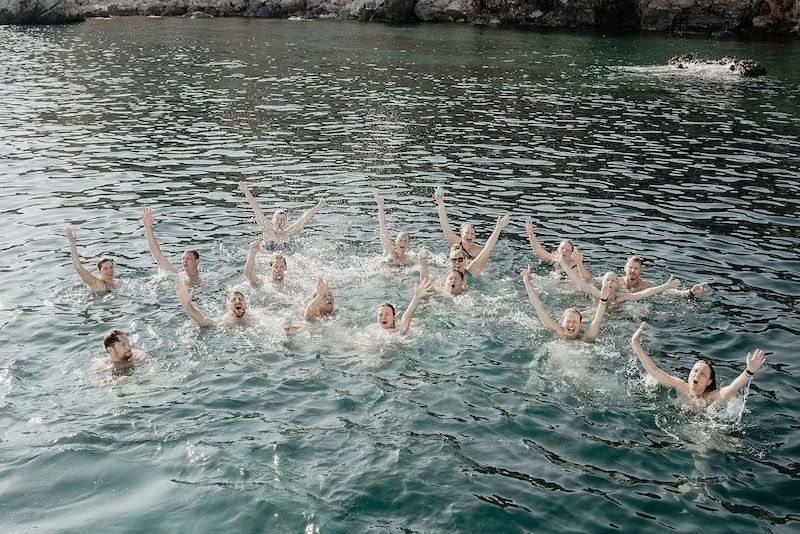
3. Genuine encounters instead of obligatory conversations
Especially at international weddings or larger gatherings, many guests do not know each other yet.
Multi-day weddings provide an opportunity for:
initial discussions on the day of arrival
a group dinner or a casual pizza or pasta night
This helps build a connection before the wedding day, and the atmosphere on the big day feels noticeably more intimate and relaxed.
4. More space for personality & atmosphere
Without the pressure of time, it’s not just the schedule that changes—it’s the entire atmosphere of a wedding.
Personalization doesn't come from adding more activities, but from providing more space.
Natural flow
less rigid program items
more focus on atmosphere than staging
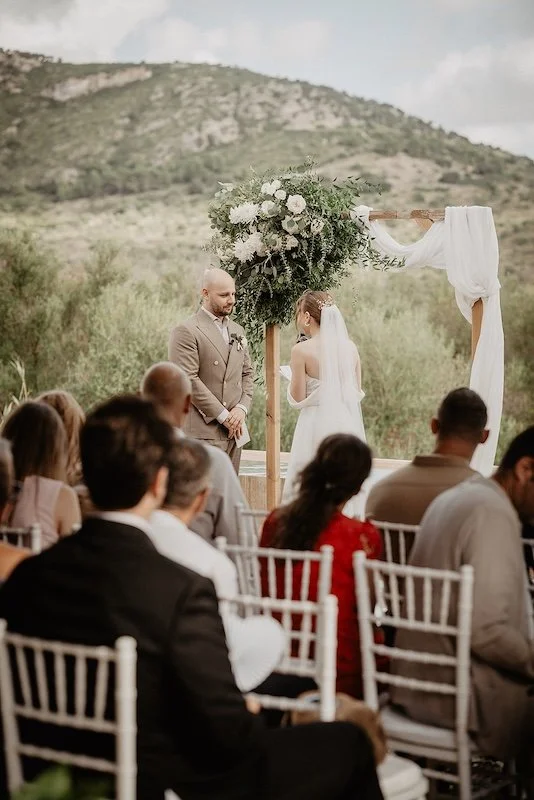
Many couples deliberately set aside the second or third day for activities that go beyond the traditional wedding day:
pool parties
Wine tastings
Catamaran tour
joint excursions
relaxed farewell
This way, the wedding doesn't become a climax with an abrupt ending, but rather a seamless experience that unfolds naturally.
5. Why multi-day weddings can be particularly well documented
By documenting the event over several days, photography and film merge into an even more profound narrative. I don’t just capture the highlight, but the entire evolution of the atmosphere—from the first hearty laughter at the welcome dinner to the relaxed finale by the pool.
From a documentary perspective, multi-day weddings offer tremendous added value:
More tranquil photos and video
more nuances
Genuine closeness
Documentary films benefit greatly from taking their time: not everything has to “work.” Moments are allowed to unfold and linger.
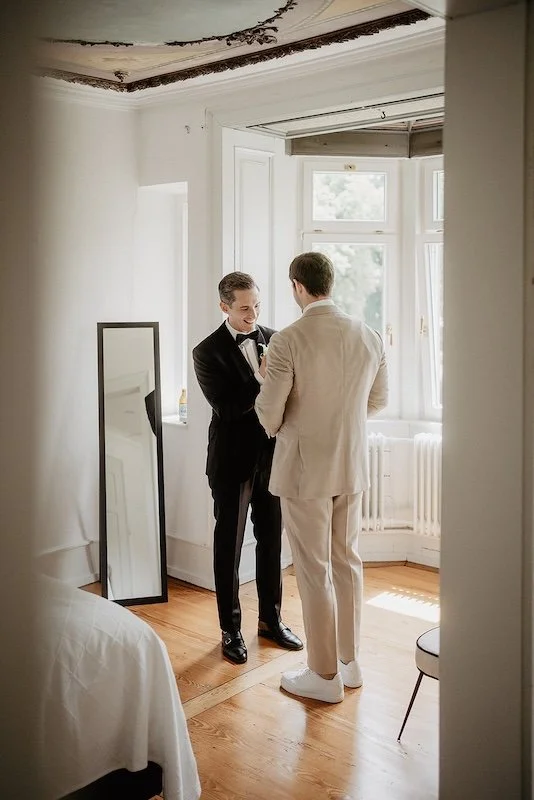
Who multi-day weddings are especially suited for
Multi-day weddings are particularly well suited to couples who:
want to celebrate consciously
have international guests
Focus on atmosphere rather than a packed schedule
Prioritizing closeness over perfection
They aren't a must, but a conscious choice to slow down.
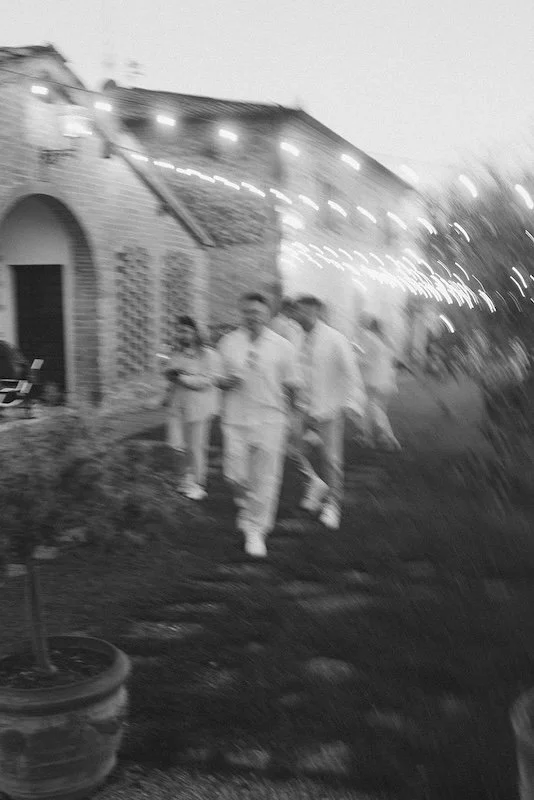
Conclusion: More time means more feeling
Weddings that last several days aren't necessarily more complicated, but they often feel much more relaxed.
They provide space for genuine encounters, for tranquility, and for memories that don’t feel rushed.
Couples who view their wedding not as a tightly scheduled event but as a shared experience will often find that a multi-day wedding concept is exactly what feels right for them.
Are you planning a wedding weekend? If you're looking for a quiet, unobtrusive, and documentary-style photographer to capture your special day, let me know—I'll be there to capture your moments in a subtle and intuitive way.
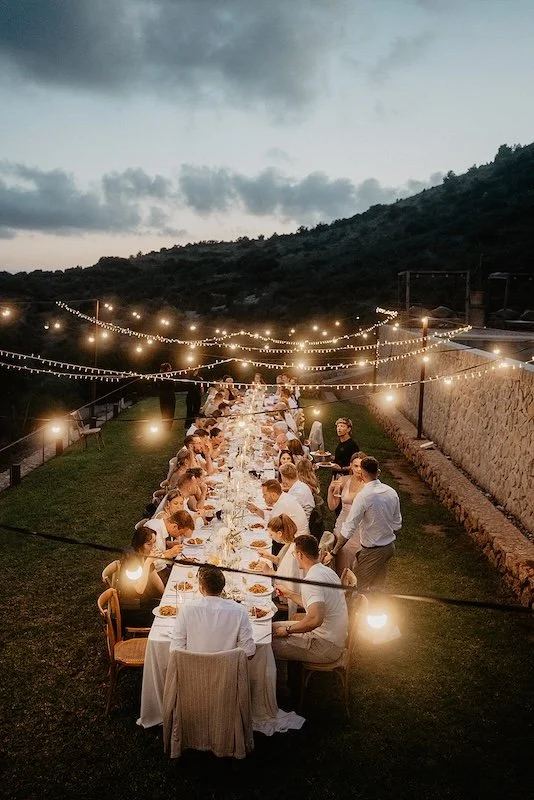
Frequently Asked Questions About Multi-Day Weddings
Are multi-day weddings only practical for destination weddings?
No. Weddings in Germany also benefit from multi-day plans, such as a pre-wedding dinner or a final day spent together.
Is a wedding lasting several days automatically more expensive?
A multi-day wedding is an investment in the quality of the time spent together. Often, the budget is reallocated so that the experience for the guests is more meaningful and lasting, rather than being spent solely on short-lived decorations.
How many days are ideal for a multi-day wedding?
Two to three days are often enough: arrival, wedding day, relaxed conclusion.
Do all guests have to participate on all days?
No. The additional days are usually optional and deliberately kept flexible.
How does a wedding lasting several days affect the photographic coverage?
It enables calmer, deeper documentation with more genuine moments and less staging.